
The Ancient Name for Living Between Two Truths
How Aristotle’s Golden Mean helped me think more clearly about balance, ambition, discipline, and the work of living well.

A little over six months ago, I wrote an article called Living Between Two Truths.

At the time, I thought I was writing about contradiction. The tension of wanting more while still being grateful. Craving freedom while needing structure. Building confidence while trying to stay humble.
But I think I was really writing about something older than I realized.
Something people have wrestled with long before Substack, social media, career pressure, productivity hacks, or whatever modern language we use to describe the same internal struggle.
I was writing about the difficult art of finding the middle.
The Golden Mean
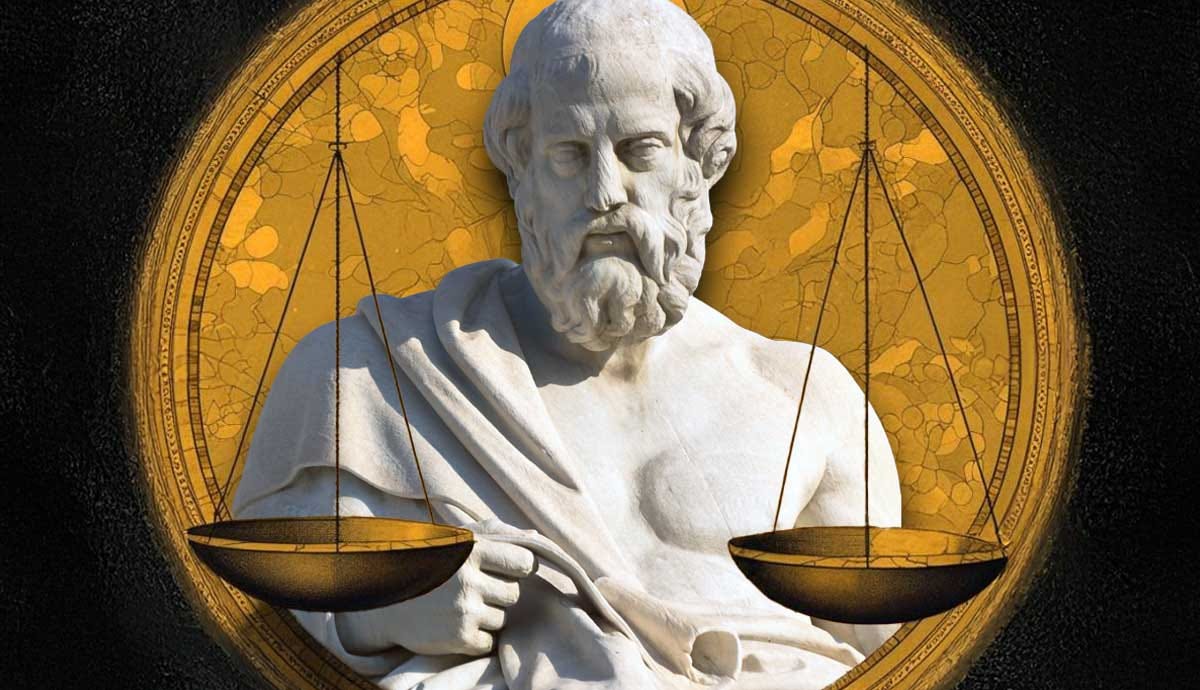
Recently, I came across Aristotle’s idea of the Golden Mean in Nicomachean Ethics, and it put a name to what I had been circling.
In simple terms, Aristotle believed virtue often exists between two extremes: excess and deficiency. Courage sits between cowardice and recklessness. Generosity sits between stinginess and wastefulness. Confidence sits between self-erasure and arrogance.
The point is not that the middle is always perfectly equal. It is not some bland compromise where you water yourself down until nothing sharp remains. The middle requires judgment. It asks you to understand the moment, the circumstance, and yourself.
That is what fascinated me most.
So many of the things we treat as modern struggles are not new at all. The language changes. The platforms change. The pressure changes. But the human question remains strangely familiar:
How much is enough?
Modern Problems, Ancient Patterns
That question feels especially relevant now.
We live in a world that constantly pulls us toward extremes. Work harder. Rest more. Be ambitious. Be content. Build your personal brand. Stop caring what people think. Optimize your life. Let go. Move faster. Slow down.
No wonder so many people feel split in half.
But maybe the problem is not that we are facing entirely new struggles. Maybe we are just facing old struggles in new environments.
Aristotle was not writing about inboxes, algorithms, career timelines, or comparison traps on the internet. But he was writing about human nature. About how easily we can become too much or too little of something. Too passive or too restless. Too rigid or too loose. Too proud or too self-doubting.
The details have changed. The pattern has not.
10 Balances That Shape a Full Life
This is where the idea becomes practical.
If living well requires finding the middle, then the question becomes: the middle of what?
Because this tension does not show up in one area of life. It shows up everywhere. In how we work. How we rest. How we speak. How we love. How we grow. How we see ourselves.
Some people become consumed by ambition. Others confuse contentment with staying still. Some people build discipline until their life becomes rigid. Others chase freedom until they lose direction.
The hard part is not simply knowing which side is “good” or “bad.”
The hard part is learning when one side has started to take over.
So here are 10 balances that I think shape a fuller life, along with people who, in different ways, seemed to practice them well.

1. Ambition & Contentment
What it means: Ambition gives your life direction. Contentment keeps you from turning every achievement into a temporary checkpoint before the next thing.
An example worth studying: John Wooden — one of the most successful coaches in college basketball history, but his philosophy was not built around chasing trophies. He defined success as peace of mind that comes from knowing you made the effort to become the best you are capable of becoming.
Read more: Wooden: A Lifetime of Observations and Reflections On and Off the Court by John Wooden
Why it matters: Ambition becomes healthier when success is measured by effort, character, and consistency instead of the next external marker. Contentment is what allows you to respect the work while you are still in the middle of becoming better.
2. Discipline & Flexibility
What it means: Discipline gives your life structure. Flexibility keeps that structure from becoming a cage.
An example worth studying: Benjamin Franklin — a writer, inventor, diplomat, and lifelong self-improver who famously tracked his virtues and built systems for personal growth. But Franklin was also adaptable enough to move between worlds: science, politics, publishing, diplomacy, and public service.
Read more: Atomic Habits by James Clear
Why it matters: Discipline is useful because it helps you act with intention instead of impulse. But when your systems become too rigid, they stop supporting your life and start controlling it.
3. Confidence & Humility
What it means: Confidence gives you the courage to believe you have something worth contributing. Humility reminds you that your perspective is incomplete, and that growth requires staying teachable.
An example worth studying: Abraham Lincoln — Lincoln had enough confidence to lead through the Civil War, but he was also willing to bring former political rivals into his cabinet, including William H. Seward, Salmon P. Chase, and Edward Bates. That combination of conviction and openness is part of what made his leadership so unusual.
Read more: Think Again by Adam Grant
Why it matters: Confidence helps you step into rooms, opportunities, and responsibilities without shrinking yourself. Humility keeps that confidence from closing your mind to counsel, correction, and the possibility that someone else may see what you cannot.
4. Courage & Discernment
What it means: Courage helps you move toward what is difficult, uncomfortable, or risky. Discernment keeps you from mistaking recklessness, anger, or impulse for bravery.
An example worth studying: Martin Luther King Jr. — King’s courage was not reckless. His philosophy of nonviolence was active, disciplined, and strategic: it resisted injustice without trying to humiliate or destroy the opponent, and it accepted suffering without retaliation.
Read more: The Courage to Be by Paul Tillich
Why it matters: Courage without discernment can become noise, ego, or unnecessary damage. The deeper strength is knowing what is worth standing for, what is worth risking, and how to act without losing sight of the outcome you actually hope to create.
5. Reflection & Action
What it means: Reflection helps you understand what matters. Action keeps that understanding from becoming something you only think about, but never live.
An example worth studying: Theodore Roosevelt — Roosevelt was not just a man of motion; he was also a serious reader and writer. The Theodore Roosevelt Association describes him as a “voracious reader and prolific writer” who authored more than 35 books, while the National Park Service notes that, as president, he used his authority to protect roughly 230 million acres of public land.
Read more: The War of Art by Steven Pressfield
Why it matters: Reflection gives your life depth, but action gives it evidence. At some point, the things you think about, journal about, and talk about have to become choices you actually make.
6. Acceptance & Agency
What it means: Acceptance means being honest about what is true. Agency means remembering that your response still belongs to you.
An example worth studying: Viktor Frankl — Frankl’s life and work are among the clearest examples of this balance. Man’s Search for Meaning is rooted in the idea that even in times of despair, human beings can still search for meaning, purpose, and strength.
Read more: Man’s Search for Meaning by Viktor E. Frankl
Why it matters: Acceptance is not giving up. Agency is not pretending you control everything. The middle is learning to face reality honestly, then asking what is still yours to do.
7. Solitude & Connection
What it means: Solitude gives you space to hear yourself clearly. Connection keeps you from mistaking isolation for peace.
An example worth studying: Henry David Thoreau — Thoreau is often remembered for his time at Walden Pond, but he was not simply disappearing from the world. Walden was an experiment in deliberate living, and his reflections were eventually turned outward through writing, critique, and public thought.
Read more: Solitude: A Return to the Self by Anthony Storr
Why it matters: Solitude can help you understand yourself, but connection is what keeps that self from becoming closed off. The healthiest relationships are not an escape from being alone; they are an extension of knowing yourself well enough to show up honestly.
8. Curiosity & Focus
What it means: Curiosity opens doors. Focus helps you walk through one of them long enough to actually build something.
An example worth studying: Charles Darwin — Darwin’s curiosity led him to observe nature deeply, collect specimens, question assumptions, and follow evidence across years of study. But curiosity alone was not enough; he also had the focus to organize those observations into a theory that changed how we understand life.
Read more: Range by David Epstein
*Bonus read: Deep Work by Cal Newport
Why it matters: Curiosity helps you explore what is possible, but focus is what lets something meaningful take shape. Without focus, even your best ideas can stay scattered across too many open doors.
9. Generosity & Boundaries
What it means: Generosity opens your life outward. Boundaries keep you from confusing love, service, or kindness with self-abandonment.
An example worth studying: Dolly Parton — Parton has built a public legacy around generosity, especially through her Imagination Library, which has mailed millions of free books to children. But she has also maintained a strong sense of ownership, privacy, and self-definition across her career.
Read more: Set Boundaries, Find Peace by Nedra Glover Tawwab
Why it matters: Giving is most sustainable when it comes from fullness rather than fear. Without boundaries, even kindness can slowly turn into resentment.
10. Seriousness & Play
What it means: Seriousness gives your life depth. Play keeps that depth from turning into heaviness.
An example worth studying: Julia Child — Child took food seriously, studying French cooking with real discipline and helping bring it to an American audience. But she also made the process feel joyful, imperfect, funny, and human.
Read more: Play: How It Shapes the Brain, Opens the Imagination, and Invigorates the Soul by Stuart Brown
Why it matters: A full life needs more than responsibility, productivity, and self-improvement. Without play, even meaningful work can start to feel mechanical.
The Work of Finding the Middle
I don’t think any of these balances are things we solve once.
You do not become ambitious and content once. You do not become disciplined and flexible once. You do not learn confidence, humility, courage, discernment, generosity, or play one time and then get to check them off forever.
Life keeps changing the equation.
A version of you may need more discipline in one season and more flexibility in another. More solitude at one point, more connection at another. More courage in one chapter, more discernment in the next.
That is what makes the middle so difficult. It is not a fixed point. It is a practice.
And maybe that is why extremes can be so tempting. They feel simpler. They give us a clean identity. The ambitious one. The disciplined one. The independent one. The generous one. The serious one.
But a full life usually asks more of us than that.
Closing Thoughts
When I first wrote about living between two truths, I was trying to describe a feeling.
Now, I think I understand it a little differently.
The middle is not where we go to avoid choosing. It is where we go to practice wisdom.
It is where we learn to want more without despising what we have. To build structure without becoming trapped by it. To take life seriously without losing the ability to laugh. To become better without treating our current selves like unfinished drafts we are supposed to be ashamed of.
Maybe that is what Present & Progressing has always been about.
Not choosing presence over progress. Not choosing progress over presence.
But learning how to live in the tension between them with more honesty, patience, and intention.
The middle is not the easy way out.
It is the work.
And if we practice it long enough, maybe it becomes the way we build a fuller life.
Till next time.
The instant Google definition for Virtue doesn’t align with how it’s usually used in writing or conversation.
I consider a virtue to be any trait or ability that must be restrained in order to exercise it the “right” way or the right amount.
My example, in your format, is defenseless and fully capable (maximum offense).
Being able to defend oneself is great. Ensuring everyone knows you can defend yourself might be red flag, provocative.
Anyway, this is my contribution. Your piece made me reflect on my own journey with virtues. Feel free to just read this. Replies are always welcome, though.
Excellent article!
Along these lines, I personally believe that everything in our lives needs to be viewed dualistically, so we can clearly perceive how balanced we are between each newly discovered, theoretical set of extremes.
We are the fulcrum for this perceptional, existential see-saw, and have to correctly position ourselves accordingly.