
Redefining My Relationship with Money: From –$44,000 to +$40,000 in 21 Months
What school never taught me, and how I started building a financial foundation in my 20s.

Redefining My Relationship With Money: From –$44,000 to +$40,000 in 21 Months
My slight obsession with personal finance started in June 2023—right after I finished my MBA and started my first full-time corporate job.
During the five years I was in school, I barely paid attention to my finances. I worked a few summer jobs and landed an internship at a Fortune 500 company, but it was mostly hourly work. That money helped cover basic living expenses and the occasional trip during school breaks.
Growing Up With “Enough”
I grew up in a solid, middle-class household in the Midwest. My family always had enough for what we needed and gave me a great childhood. I never had to worry about money—so I never developed a real relationship with it.
I was decent at saving, though. One of my earliest memories is helping our elderly neighbor with yard work. Every few weeks, I’d get a hundred bucks or so. I didn’t do much with it, but I remember saving enough to buy my first TV at 14. That was my first taste of delayed gratification.
The Wake-Up Call
Fast forward to my first job.
Fresh out of school, I had about $44,000 in student loan debt, a few hundred dollars in my bank account, and had just come back from a trip to Maui (highly recommend). At my company, we get paid monthly. Since I started off-cycle, there was a moment where I wasn’t sure I’d get my first paycheck in time to cover rent. My girlfriend and I had just signed a lease for a $1,350 one-bedroom apartment.
I started doing the math and realized: if the paycheck didn’t come through, I’d have to call my parents for help. Not exactly how I envisioned starting my adult life.
Luckily, I got a prorated payment just in time. But it was a wake-up call:
I’m now responsible for managing my money—and no one is coming to save me.
And to be honest, I felt embarrassed. I knew asking for help wouldn't ruin my future, but the thought of needing a bailout on my first real adult move didn’t sit right. I didn’t want this to become normal.
Here I was, freshly graduated with a master’s degree—yet totally lost when it came to budgeting or what financial stability even looked like. That moment forced me to admit that I didn’t know what I was doing yet. And that’s okay, but I also knew I needed to figure it out.
Learning What School Didn’t Teach Me
That was the moment everything shifted.
I started consuming everything I could—The Money Guy Show, Dave Ramsey, Humphrey Yang, and tons of finance YouTubers. I read all the books people recommend:
The Psychology of Money
The Millionaire Next Door
I Will Teach You to Be Rich
The Simple Path to Wealth
The 80/20 Principle
But what mattered more than the content was the mindset shift it sparked. I would watch or read financial literacy content for roughly one hour every day. It started to become a natural habit for me: listening while in the shower, working out, driving to work. Whenever I had an opportunity to learn I was taking it.
Why I Chose the Long Game
The biggest takeaway from all of it? The power of compounding interest—and how critical time is to make it work.
Sure, it’s tempting to chase what you see online. Flashy influencers. Overnight success stories. Crypto moonshots.
But the truth is, most of that is either fake or such a statistical outlier that it's basically meaningless for most people.
Instead, I focused on what I could control:
My savings rate
My net worth progression
Automating my investments
Increasing my income over time
There’s a time and place to take risks, but when you’re just starting out, you need to master the fundamentals. Just like in sports—if you skip the basics, you’re screwed when the game gets harder.
So yeah, maybe I’ll explore more complex strategies someday. But right now? I’m focused on doing the simple things well, over and over and over again.
Where I Am Now
As I write this, I’m sitting in a coffee shop in Germany on a temporary six-month assignment with the same company I started with in 2023.
I opened my Monarch budgeting app today and paused when I saw this:
My net worth is now +$40,000.
Just 21 months ago, it was –$44,000.
Quickly approaching a $100,000 improvement in the coming months—without a huge salary, side hustle empire, or viral moment. Just consistent habits, long-term thinking, and staying patient.
What’s Coming Next
I want to start sharing exactly how I did it—not because I’m a financial guru, but because I wish someone had done this for me.
I found this great visual a year ago on Reddit, and I think there’s even more room to break it down, simplify it, and turn it into a real, step-by-step foundation for anyone in their 20s. As you can see, it is pretty dense. Having created and taught a class at a university prior, I have a decent skillset at distilling information into digestible pieces and hopefully making it a little fun along the way.
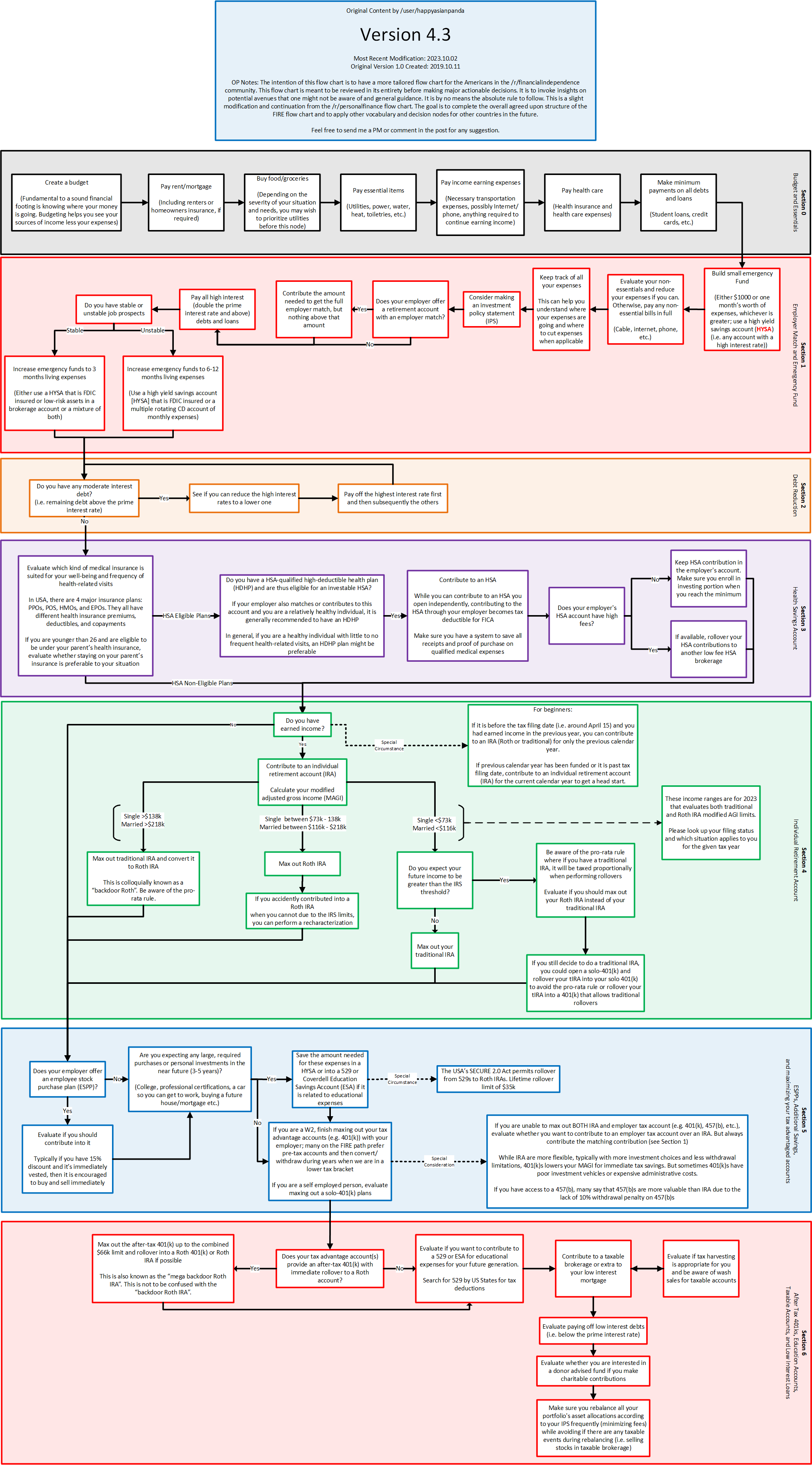
I’ll walk through:
How I budget (and track everything without it taking over my life)
The steps I am using to pay off my student loans
How I built a consistent investment strategy without overthinking it
What mindset shifts actually helped—and which ones didn’t
If You’re in Your 20s…
If you just landed your first job and finally have steady income—this is your moment. Not to panic. Not to chase noise. But to start learning the basics and giving your money a job.
My goal is to help you lay a rock-solid financial foundation before you turn 30.
It won’t be flashy.
It won’t be easy.
But it will be real.
Let’s build it—one step at a time.
📬 Want to follow along? Subscribe to get the next post where I’ll break down the first few steps I took to go from negative net worth to a positive financial trajectory.
👇 And if you’ve had your own money wake-up call—I'd love to hear about it. Drop a comment or hit reply.